



[ad_1]
Education has never been so dependent on technology as it is today. Classrooms have gone virtual, parents have become more involved educators, and teachers have become more familiar than ever with video conferencing platforms. Google is today announces a multitude of educational tools to improve its existing products designed for learning and to help students and teachers navigate online education.
Classroom
Most of these updates arrive at business class service, which is a dashboard (or “learning management system”) for teachers and students. The Android app will get better offline support later this year, allowing students to start work, open Drive attachments, review and write homework without an internet connection. Photo uploads are also improved in the Android app, allowing students to combine photos into one document, adjust lighting, crop and rotate their images. When using Classroom to edit homework, whether you’re on the web, iOS, or Android, you’ll soon be able to bold, italicize, and underline words, as well as add bullet points. Google is also launching a free introductory computer course called “CS First” and it is now available.
To help teachers detect possible plagiarism, Google is also adding “originality reports” in new languages such as Spanish, Portuguese, Norwegian, French, Italian, Indonesian, Japanese, Finnish, German, Korean, Malay and Hindi. Later this year, teachers reviewing homework on Android will also be able to switch between submissions from different students, grade while posting an assignment, and share their comments. There will also be a new Student Engagement Tracking feature to show statistics on which students have submitted assignments and those who have commented on posts. Administrators will soon be able to obtain audit and activity logs to better understand what happened in the event of a system failure.
Those using an existing educational framework such as a Student Information System (SIS) will be able to better integrate Classroom with these services later this year. The grade export, for example, arrives at SIS in Aspen and will allow teachers to export students’ grades from Classroom to SIS, which should reduce unnecessary data entry. They will also be able to fill in and synchronize class and list information with Classroom.
Meet
Google has already unveiled some education-focused changes for its video chat service at its “Anywhere School” event in August, but today announces new management tools for teachers. First, teachers will soon be able to end meetings of all participants, including in breakout rooms. They will also have the option to mute all attendees in the coming weeks, and in April they will also be able to control when students can wake up. Moderation controls like screen sharing, chat access, and meeting permission will also be available on mobile devices for teachers in the coming months.
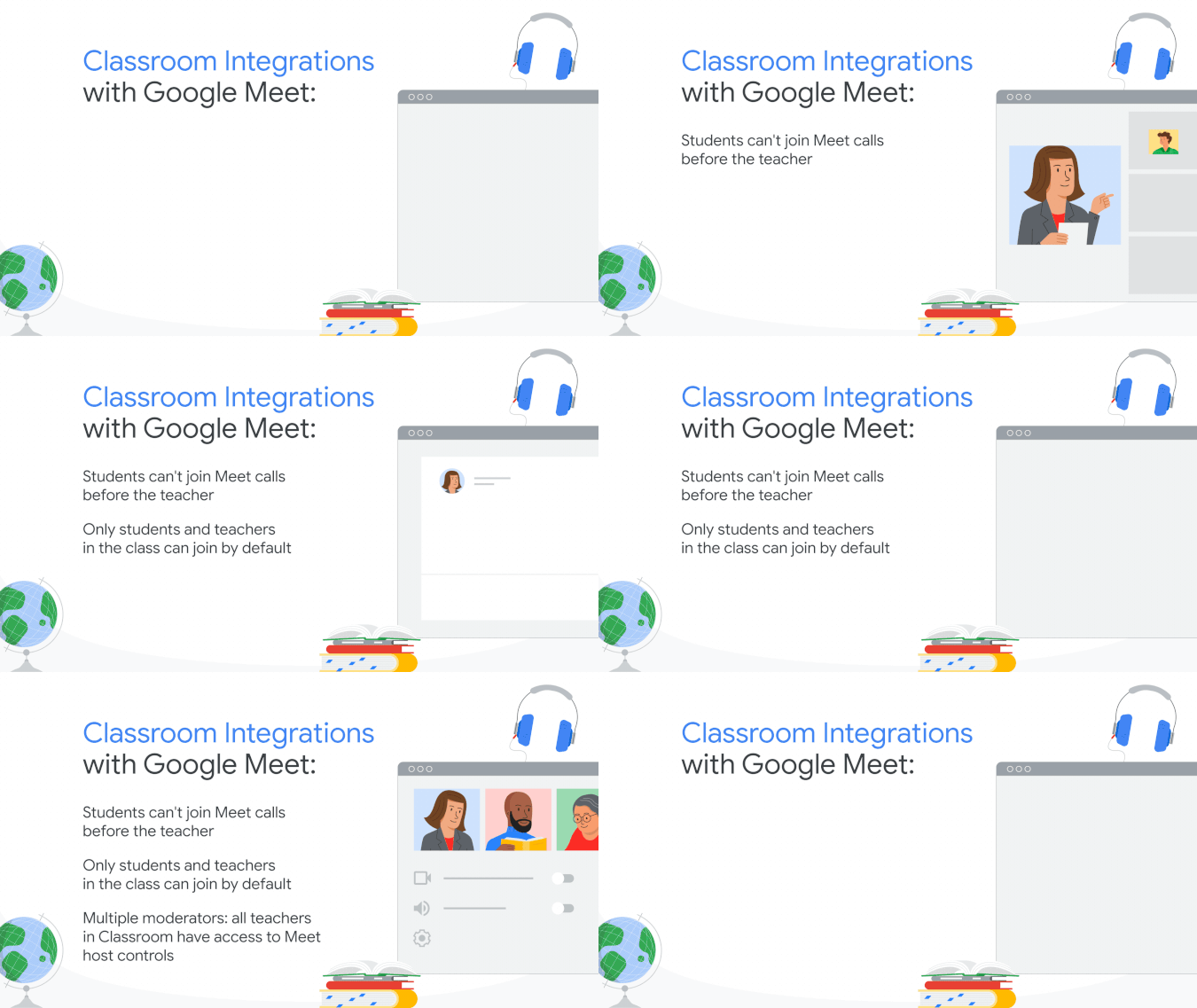
Meet will also work better with Classroom, pulling information from the list so that only students and teachers in each class are allowed to participate in relevant meetings. Each teacher recognized by Classroom will be assigned host status so that they can help manage the class. Later this year, Meet sessions started outside of Classroom will also be able to support multiple hosts. In a few weeks, teachers will also be able to set up breakout rooms in a meeting session ahead of time and get copies of the meeting transcripts. Students will also be able to choose skin tones when using emojis to react in class (teachers can control whether emoji reactions are turned on).
In April, the company is also adding new settings to the administration console to give school leaders the ability to set rules such as who can participate in calls organized by their school and whether to attend school meetings. other schools must be licensed. Administrators now also have access to audit logs, and soon more information will be added to them, such as email addresses of external participants, to better sort out issues.
Education workspace
Google also announced a new education workspace which is essentially a renowned G Suite for Education. Instead of offering just two options (Education Fundamentals and Plus), the company is adding an Education Standard version and a Teaching and Learning upgrade starting April 14. Those who already have G Suite For Enterprise For Education (what name) will soon start to see the new name “Education Plus” in their consoles and they will soon have all the features of this next level. New features are also coming to Workspace For Education, including Meet meeting transcripts and drafts saved in Google Forms (availability depends on the edition of the service you’re using).

It’s worth noting that Google is eliminating the unlimited free storage it has so far provided to qualifying schools and universities. According to the company, as it “has become destined to serve more schools and universities each year, storage consumption has also accelerated rapidly” and “storage is not consumed equitably between – and within – The establishments”. The company is therefore switching to a new model of shared storage which, according to it, will have an impact on less than 1% of institutions. All institutions will now have 100 TB of shared cloud storage between all their users. It will go into effect for existing customers in July 2022 and will be immediate for those who sign up next year.
Users won’t have to do anything, it seems that this change happens automatically. Google said it will contact relevant institutions in the coming weeks to discuss the storage options they may need. According to the company, 170 million students and teachers around the world now use Workspace for Education. Meanwhile, Classroom currently serves over 150 million users worldwide, up from 40 million a year ago. Obviously, the need for distance learning tools has increased dramatically during this time, and Google’s focus on this area could help make learning a little easier for students, teachers. and the parents.
[ad_2]

